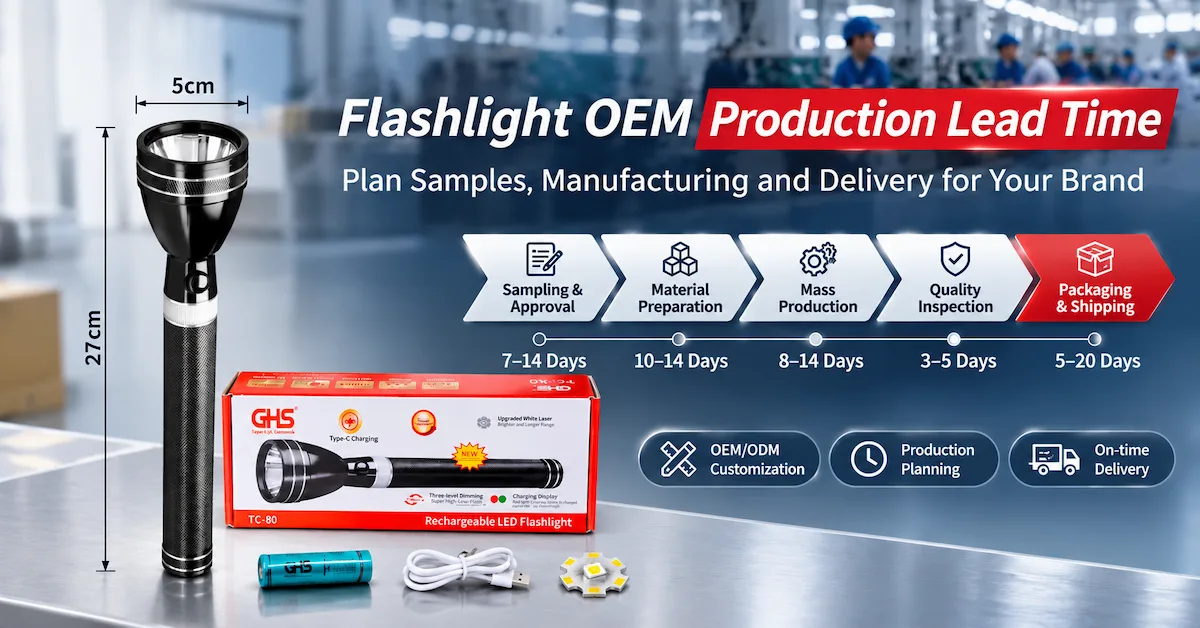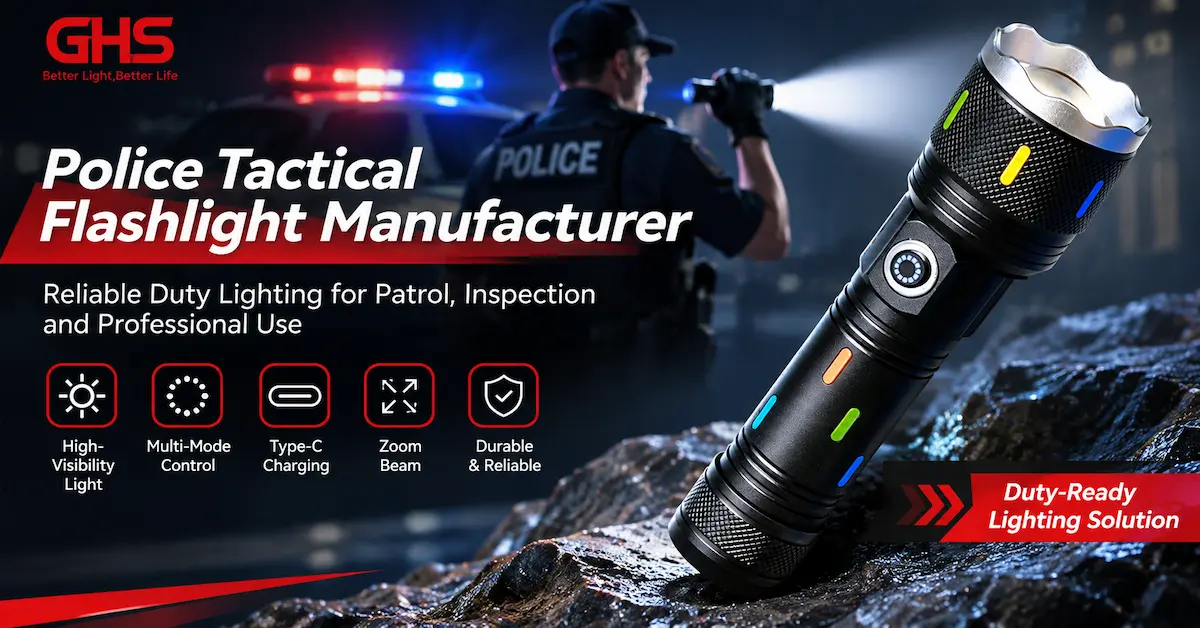

Finding a reliable flashlight OEM ODM factory China is not only about manufacturing capability, product appearance, or competitive quotations. For international lighting brands and distributors, a successful partnership depends on how clearly product requirements, engineering responsibilities, design ownership, and production documentation are managed.
An OEM project may begin with an existing rechargeable flashlight and require only branding or accessory changes. An ODM project may involve developing new electronics, modifying optical components, or creating an original housing structure.
These projects require different levels of engineering support, investment, testing, and contractual protection.
TL;DR: Before working with a flashlight OEM/ODM factory in China, buyers should define the customization level, confirm ownership and usage rights for designs and tooling, establish a controlled bill of materials (BOM), approve engineering samples, and agree on quality and change-control procedures. A complete production handover helps protect product consistency, intellectual property interests, and future sourcing flexibility.
This guide explains the technical and commercial decisions that overseas buyers should address before releasing a customized flashlight into production.
Brands researching available product platforms can begin by exploring the GHS LED flashlight product collection.
Key Takeaways
-
OEM and ODM involve different development responsibilities. The appropriate model depends on whether the buyer needs branding, functional changes, or original product development.
-
Design ownership must be agreed in writing. Paying development or tooling fees does not automatically establish ownership of all engineering files or intellectual property.
-
A controlled BOM is essential. Critical components such as LEDs, drivers, batteries, and charging circuits influence product performance.
-
Engineering samples and pilot production serve different purposes. Both can be useful before large-scale manufacturing.
-
Technical claims require evidence. Brightness, runtime, water resistance, and battery specifications should be verified using applicable methods.
-
Repeat production requires change control. Approved specifications should remain consistent unless changes are reviewed and authorized.
1. OEM vs. ODM Flashlight Manufacturing: Which Model Fits Your Project?
A flashlight OEM ODM factory China may provide different levels of manufacturing and product-development support.
However, OEM and ODM terminology can vary between suppliers. Buyers should define the actual scope of work rather than rely on the label alone.
OEM, ODM, and Private Label Compared
| Cooperation Model | Main Development Approach | Typical Requirements | Best-Suited Buyers |
|---|---|---|---|
| Private Label | Brand an existing flashlight | Logo, packaging, labels, accessories | Retailers, wholesalers, emerging brands |
| OEM | Manufacture an agreed product configuration | Branding, selected functional or component changes | Importers, established brands |
| ODM | Manufacturer-supported product design or development | New or modified structures, optics, electronics, tooling | Product developers, differentiated lighting brands |
When Should Buyers Choose OEM?
OEM cooperation is often suitable when an existing flashlight platform already meets most functional requirements.
For example, a distributor may select a rechargeable LED flashlight and request customized packaging, branding, or approved accessory configurations.
This can reduce unnecessary development compared with designing a new product.
However, even relatively simple modifications require clear specifications and sample approval.
When Does ODM Make More Sense?
ODM may be appropriate when a brand needs meaningful product differentiation that cannot be achieved through packaging or surface branding.
Examples include:
-
Unique housing dimensions or appearance
-
Modified lighting controls
-
Alternative optical structures
-
New battery or charging configurations
-
Specialized ergonomic features
-
Changes to the internal electronic architecture
Such projects may require engineering feasibility analysis, prototypes, tooling, testing, and production validation.
The central question is not whether a factory advertises OEM/ODM services. It is whether the factory can perform the specific engineering and manufacturing work required by your project.
2. What Should Buyers Define Before Contacting a China Flashlight Factory?
A complete product brief is the foundation of a successful OEM or ODM project.
Without clear requirements, manufacturers may provide quotations for products with different components, performance, and production costs.
Flashlight Product Requirements Matrix
| Requirement | Information to Define | Why It Matters |
|---|---|---|
| Target Application | Outdoor, industrial inspection, emergency, retail | Determines product positioning |
| Product Type | Compact, rechargeable, zoomable, high-intensity | Guides platform selection |
| Light Output | Target lumens and operating modes | Defines illumination requirements |
| Optical Performance | Beam distribution, intensity, distance | Influences optical design |
| Runtime | Required operating duration | Influences battery and driver selection |
| Battery | Chemistry, capacity, configuration | Affects size, cost, and reliability |
| Charging | USB-C or another charging method | Influences electronic design |
| Housing | Material, dimensions, finish, weight | Affects tooling and production |
| Environmental Protection | Required IP or impact performance | Determines testing requirements |
| Branding | Logo, colors, labels, retail packaging | Defines commercial presentation |
| Target Cost | Intended product-cost range | Supports design-to-cost decisions |
| Order Forecast | Initial quantity and expected repeat volume | Informs commercial feasibility |
Separate Mandatory Requirements From Preferences
A useful technical brief should distinguish between:
Must-have requirements: Specifications that the product cannot fail without becoming unsuitable for its intended application.
Preferred requirements: Features that improve competitiveness but may be adjusted to manage cost or development complexity.
For example, a required charging configuration may be essential, while a particular decorative housing finish may be negotiable.
This distinction helps engineering teams evaluate alternatives without compromising the product's primary purpose.
3. Who Owns the Flashlight Design, Tooling, and Engineering Files?
Design ownership is one of the most important issues in OEM/ODM cooperation.
The buyer and manufacturer should agree on which party owns existing technology, newly developed designs, physical tooling, and project documentation.
Design and Tooling Ownership Matrix
| Project Asset | Key Ownership Question | Recommended Agreement |
|---|---|---|
| Brand Logo | Who owns the trademark? | Confirm brand ownership and permitted use |
| Product Appearance | Who owns the new industrial design? | Define ownership or licensing rights |
| Mechanical Drawings | Who may use and modify the drawings? | Specify access and permitted uses |
| Electronic Circuit Design | Who controls schematics and PCB design? | Define ownership and disclosure scope |
| Firmware | Who may use, update, or transfer the software? | Establish applicable rights |
| Injection Molds or Tooling | Who owns the physical tools? | Document title, location, and access |
| Bill of Materials | What component information will be provided? | Agree on BOM disclosure and control |
| Test Reports | Who may use and distribute the reports? | Define reporting and usage rights |
| Packaging Artwork | Who owns the design files? | Specify approved artwork and usage |
| Project-Specific Developments | Who owns newly created intellectual property? | Establish written contractual terms |
Does Paying for Tooling Mean the Buyer Owns the Mold?
Not automatically.
Ownership depends on the parties' agreement and applicable law.
Buyers should clarify whether tooling charges represent a purchase, development fee, deposit, or amortized manufacturing expense.
A tooling agreement should address ownership, maintenance, storage, access, and what happens if the business relationship ends.
What Happens If the Buyer Changes Factories?
This is a useful question to address before development begins.
Depending on the contractual arrangement, the buyer may need access to approved technical documentation, tooling, product specifications, and relevant intellectual property rights.
A manufacturer-developed ODM platform may include pre-existing intellectual property that is not transferred simply because a buyer pays for customization.
Procurement recommendation: Define background IP, newly developed IP, tooling ownership, permitted use, confidentiality, and exit arrangements before committing significant engineering investment.
These are contract negotiation considerations, not assumptions about GHS's standard commercial terms.
4. Which GHS Flashlight Platforms Can Support Initial OEM/ODM Discussions?
GHS (Guanghuishi) offers several rechargeable LED flashlight platforms that overseas buyers can examine when planning customized lighting products.
Existing platforms may help buyers determine whether their requirements can be met through modification or require more extensive product development.
GHS Rechargeable Flashlight Comparison
| Model | Published Product Characteristics | Potential Development Direction | Items to Confirm |
|---|---|---|---|
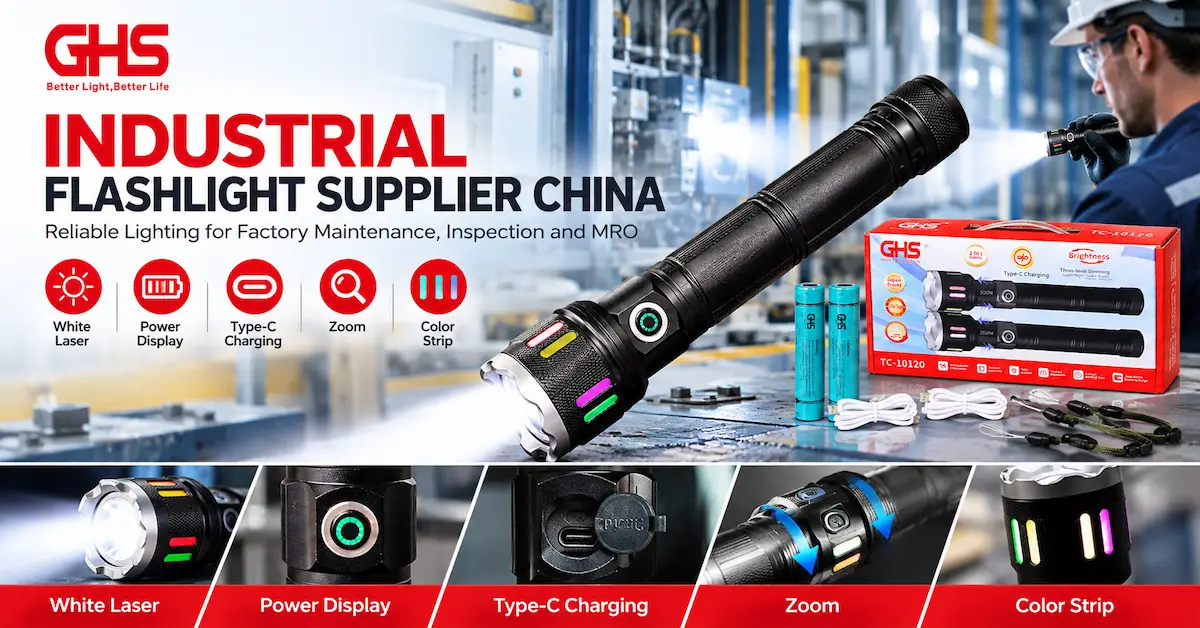
| TC-10120 | Rechargeable cylindrical body, Type-C charging, side switch, zoomable design | Branded utility lighting products | Logo, packaging, battery and configuration options |
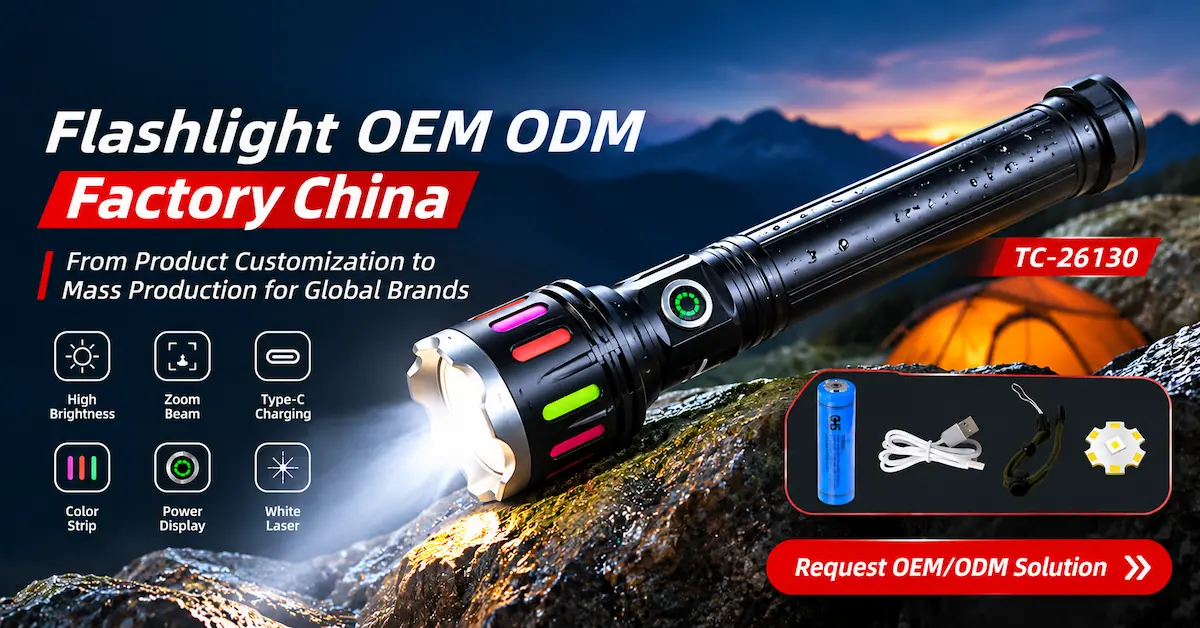
| TC-26130 | Rechargeable operation, adjustable beam, side controls, multiple package presentations | Retail and wholesale flashlight sets | Variant identification, accessories, customization |
| S-P161 | Rechargeable handheld format, textured grip, adjustable beam concept | Portable outdoor and utility lighting | Exact version, electronics, accessories |
| S-P200W | Larger rechargeable handheld format, high-intensity series, adjustable beam | Higher-positioned handheld lighting products | Verified beam performance, weight, component options |
These models are starting points for technical discussion, not confirmation that every listed modification is available.
How Should Buyers Select a Development Platform?
A practical platform-selection process includes:
-
Identify the intended market and target users.
-
Review existing products with similar functions.
-
Compare visible features and published specifications.
-
Request current technical information.
-
Identify which requirements are already satisfied.
-
List the changes needed.
-
Ask the factory to evaluate feasibility, cost, and testing implications.
When a standard product meets most requirements, modifying an existing platform may be more economical than developing a completely new structure.
If the design requires substantial changes, the project should be managed as a formal development program.
Explore available GHS flashlight models
5. What Engineering Documents Should an OEM/ODM Factory Deliver?
One of the most overlooked parts of flashlight development is the engineering handover package.
A physical sample demonstrates how a product looks and operates, but it does not fully describe the components and manufacturing requirements needed to reproduce it.
Six Essential Engineering Handover Documents
| Document | Main Contents | Purpose |
|---|---|---|
| Product Requirements Specification (PRS) | Function, performance, application, constraints | Defines the agreed product |
| Approved Drawings | Dimensions, interfaces, materials, finish | Controls mechanical construction |
| Bill of Materials (BOM) | Components, part identifiers, approved alternatives | Controls materials and components |
| Test and Acceptance Plan | Test methods, limits, sample requirements | Defines product verification |
| Approved Sample Record | Final sample version, results, deviations | Links the sample to specifications |
| Production Release Record | Approved revision, packaging, manufacturing conditions | Authorizes production |
The availability and disclosure of each document depend on the agreed project scope and intellectual property arrangements.
Why Is a Controlled BOM Important?
A flashlight BOM may contain components such as:
-
LED light source
-
Driver electronics
-
PCB
-
Rechargeable battery
-
Charging circuit
-
Switches
-
Optical components
-
Housing
-
Seals and fasteners
-
Packaging and accessories
Changes to these components can affect brightness, runtime, heat generation, charging behavior, and reliability.
For this reason, buyers should identify critical components and agree on how substitutions will be evaluated.
What Is a Production Release Record?
A production release record confirms which product revision is approved for manufacturing.
It should identify the current specifications, approved samples, component requirements, inspection criteria, and packaging information.
This prevents a common problem: engineering teams, sales staff, and production personnel working from different versions of the same product.
6. How Should Engineering Development Move Into Mass Production?
For technically customized projects, the transition from development to production should be managed through defined approval stages.
This is a recommended workflow that buyers can use when discussing a project with a flashlight OEM ODM factory China.
Design-to-Production Handover Process
| Stage | Main Work | Approval Requirement |
|---|---|---|
| 1. Requirement Review | Confirm application, technical brief, cost objectives | Agreed requirements |
| 2. Engineering Feasibility | Evaluate components, design changes, tooling needs | Feasibility decision |
| 3. Prototype Development | Produce engineering samples | Initial functional evaluation |
| 4. Design Verification | Test performance, reliability, and relevant protection requirements | Documented test results |
| 5. Pilot Production | Evaluate production-representative units and processes | Manufacturing readiness |
| 6. Production Release | Freeze approved configuration and QC requirements | Authorized production revision |
| 7. Mass Production | Manufacture against controlled specifications | Agreed quality acceptance |
Why Is Pilot Production Valuable?
A prototype can demonstrate that a design is technically possible.
A pilot build helps determine whether the design can be manufactured repeatedly using the intended production process.
Pilot production may reveal issues involving assembly tolerances, component fit, testing efficiency, or packaging.
The appropriate pilot quantity and approval requirements should reflect the project's complexity and commercial risk.
When Should the Design Be Frozen?
Design freeze should occur when the required technical configuration has been approved for the next production stage.
It does not mean that changes become impossible.
Instead, changes after release must follow a documented review and approval process.
7. How Should an OEM/ODM Factory Verify Flashlight Performance?
Technical claims should be supported by measurements and suitable testing methods.
Recommended Product Verification
| Test Area | What Should Be Evaluated |
|---|---|
| Light Output | Measured output at specified modes |
| Peak Beam Intensity | Beam concentration |
| Beam Distance | Distance under defined test conditions |
| Runtime | Sustained operation at relevant settings |
| Charging | Charging operation and electrical behavior |
| Battery System | Approved components and required protection |
| Thermal Behavior | Temperature and output response |
| Mechanical Operation | Switches, focusing mechanisms, assembly |
| Environmental Protection | Applicable ingress and impact testing |
| Final Appearance | Housing finish, logo, assembly quality |
ANSI/PLATO FL 1 Performance Framework
ANSI/PLATO FL 1-2025 provides a standardized approach to testing and reporting portable lighting performance.
It covers light output, beam distance, peak beam intensity, runtime, impact resistance, and water and dust protection.
The revision also provides methods related to short-duration elevated brightness, such as Turbo or Boost modes.
Buyers can use the standard as a reference when defining comparable performance requirements.
However, a manufacturer's reference to the standard does not establish that every product has been independently certified or tested to it.
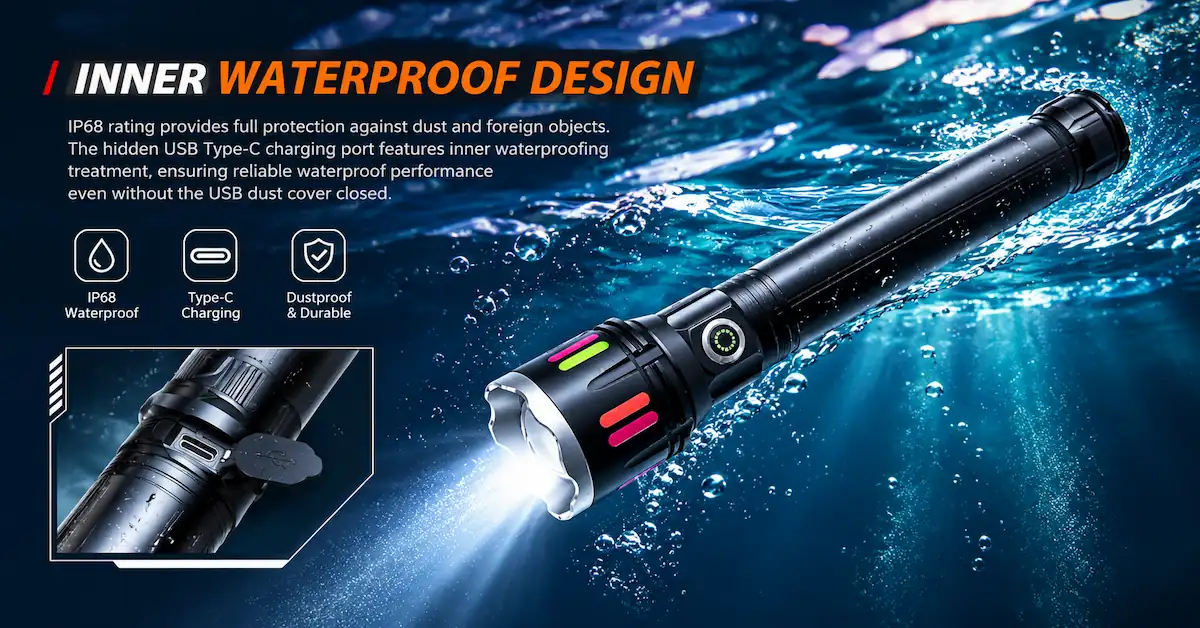
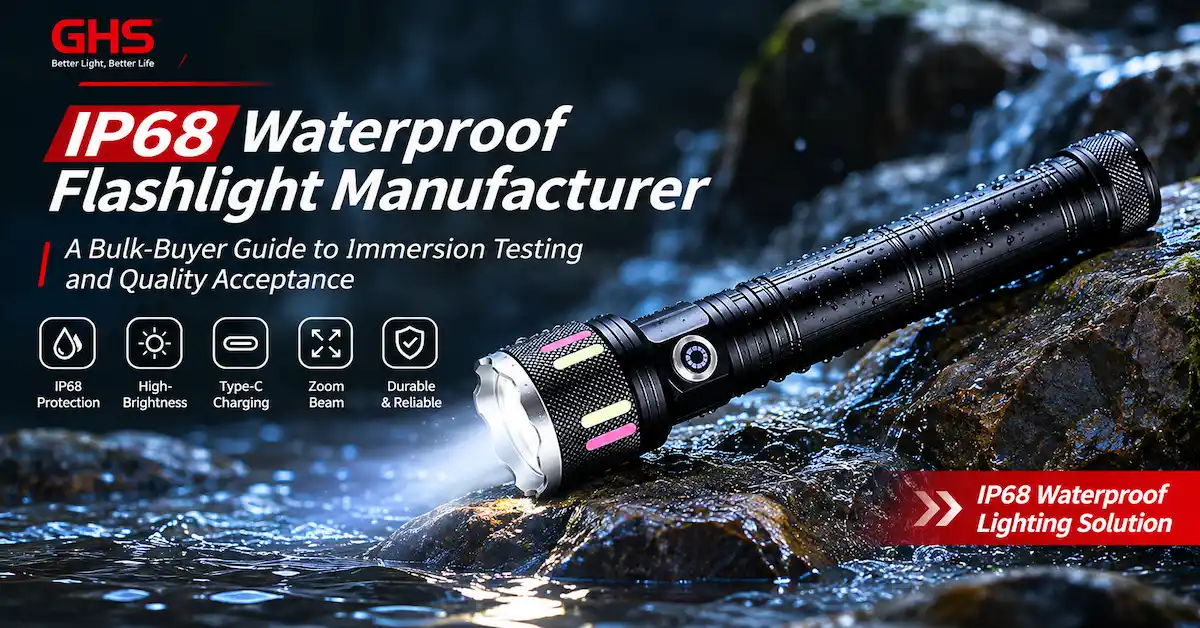
IEC 60529 and Waterproof Design
If ingress protection is part of the product specification, the buyer should identify the exact required rating and applicable test conditions.
IEC 60529 provides the IP Code classification framework.
Changes involving charging ports, switches, lenses, or housing interfaces may affect the product's original protection performance.
Therefore, modified configurations may require additional evaluation.
Rechargeable Battery Documentation
For international shipments, rechargeable flashlights containing lithium batteries may require relevant transportation documentation.
IATA's 2026 guidance addresses lithium-battery classification and shipping requirements, including UN 38.3-related testing.
The correct requirements depend on the battery configuration and transportation method.
Importers should verify applicable documentation before arranging shipment.
8. How Can Buyers Prevent Unapproved Engineering Changes?
Engineering change control is particularly important for OEM/ODM flashlight projects.
A supplier may need to replace a component because of availability, cost, or technical improvement.
However, even a small component change can influence the final product.
Recommended Engineering Change Procedure
Step 1: Change Request
Identify the proposed modification and why it is necessary.
Step 2: Technical Impact Review
Evaluate effects on performance, dimensions, safety, cost, tooling, testing, and compatibility.
Step 3: Sample or Documentation Update
Prepare revised samples or technical information where required.
Step 4: Buyer Approval
Obtain the required authorization before implementing the change.
Step 5: Revision and Batch Control
Record which product version and production batches contain the approved modification.
Examples of Changes Requiring Review
| Proposed Change | Potential Impact |
|---|---|
| Different LED | Output, beam, color, thermal behavior |
| Battery Replacement | Runtime, charging, transportation |
| Driver Modification | Modes, efficiency, brightness regulation |
| Switch Change | Operation and environmental sealing |
| Housing Material Change | Weight, finish, heat management |
| Optical Component Change | Beam distribution and distance |
| Charging Circuit Change | Electrical and charging performance |
Buyer takeaway: A lower-cost substitute is not necessarily equivalent to the originally approved component.
A documented engineering change process helps maintain production consistency and protects the agreed product specification.
9. What Determines OEM/ODM Flashlight Development Cost?
Custom flashlight pricing should separate one-time development costs from recurring manufacturing expenses.
Otherwise, buyers may struggle to compare quotations.
OEM/ODM Cost Structure
| Cost Category | Description | Main Commercial Question |
|---|---|---|
| Engineering Development | Design and technical work | Is the fee one-time or recurring? |
| Prototype Samples | Engineering samples and revisions | How many revisions are included? |
| Tooling | Molds, fixtures, specialized equipment | Who owns and maintains the tooling? |
| Testing | Performance, reliability, applicable documentation | Which tests are included? |
| Components | LED, battery, electronics, housing | What specifications are quoted? |
| Manufacturing | Assembly and production | What is the unit cost by quantity? |
| Branding | Logo, color, printing | Are setup fees required? |
| Packaging | Retail boxes, manuals, accessories | Is there a separate packaging MOQ? |
| Quality Inspection | Product testing and acceptance | Who pays for additional inspections? |
| Logistics | Shipping and related charges | Which delivery terms apply? |
Understand NRE and Tooling Charges
NRE stands for Non-Recurring Engineering.
It generally refers to one-time development activities rather than the recurring cost of manufacturing each unit.
A buyer should clarify what the NRE fee covers, whether additional revisions are included, and what rights are granted over resulting deliverables.
Tooling costs should be treated separately when appropriate.
How Does Development Complexity Affect MOQ?
MOQ may vary according to component purchasing, customization processes, packaging, tooling, and production setup.
An existing flashlight with customized packaging may involve different commercial requirements from a new housing design.
There is no universal MOQ or development lead time applicable to every OEM/ODM flashlight project.
Buyers should request written quotations based on the agreed scope.
10. Why Consider GHS for Flashlight OEM/ODM Projects in China?
GHS (Guanghuishi), operating under the published English company name Guangdong Guanghuishi Electrical Appliances Co., Ltd., is a China-based lighting business integrating research and development, manufacturing, and sales.
According to its company profile, GHS was established in 2009 and operates a manufacturing facility in Zhaoqing, Guangdong Province.
The company also reports establishing a Dubai branch in 2017 to support its Middle Eastern business activities.
GHS presents product-development, manufacturing, and quality-management capabilities and lists multiple rechargeable flashlight platforms.
For overseas brands and distributors, these products provide a basis for discussing existing product options, OEM branding, and potential ODM development.
What Can Buyers Discuss With GHS?
Buyers can inquire about:
-
Available flashlight platforms
-
OEM branding and packaging
-
Product configuration changes
-
Engineering feasibility for custom requirements
-
Prototype and sample arrangements
-
Technical specifications and test information
-
Production quality-control procedures
-
Project-specific MOQ and lead time
-
Design-documentation and tooling arrangements
Specific engineering deliverables, intellectual property rights, customization scope, certifications, and commercial terms must be confirmed for each project.
Buyers can review the GHS company profile, factory videos, and product videos as part of their evaluation.
11. What Should You Include in a Flashlight OEM/ODM RFQ?
An effective request for quotation should allow the factory to evaluate both the technical and commercial scope.
OEM/ODM Project RFQ Checklist
| Requirement | Buyer Information |
|---|---|
| Project Type | Private label, OEM modification, ODM development |
| Target Market | Destination country and sales channel |
| Application | Outdoor, industrial, utility, emergency lighting |
| Existing Reference | Preferred GHS model or product concept |
| Technical Requirements | Light output, runtime, beam, battery, charging |
| Mechanical Design | Size, material, housing, ergonomic requirements |
| Customization | Logo, color, packaging, electronic modifications |
| Design Ownership | Required IP, tooling, and documentation arrangements |
| Testing | Performance and environmental requirements |
| Order Volume | Initial quantity and expected annual demand |
| Target Cost | Product-cost and development-budget objectives |
| Schedule | Development and launch requirements |
| Quality Control | Acceptance criteria and production-change rules |
A complete RFQ reduces ambiguity and helps the buyer compare quotations based on equivalent requirements.
12. Frequently Asked Questions About Flashlight OEM/ODM Factories in China
1. What is the difference between an OEM and an ODM flashlight factory?
OEM generally involves manufacturing to an agreed product specification, often using an existing platform. ODM involves greater manufacturer participation in product design or development. The specific responsibilities depend on the project agreement.
2. Can a flashlight factory manufacture products with my brand logo?
Many OEM suppliers offer branding services. Available methods, eligible models, packaging options, and minimum quantities should be confirmed with the selected manufacturer.
3. Can I develop a completely new flashlight design in China?
Potentially, yes. A new design may require mechanical engineering, electronic development, optical design, prototypes, tooling, testing, and production validation. The factory's ability to perform these tasks should be assessed before contracting.
4. Who owns the mold in an ODM flashlight project?
Tooling ownership depends on the parties' contractual arrangement. Buyers should clarify ownership, payment, storage, maintenance, transfer conditions, and permitted use before approving tooling investment.
5. What is a flashlight BOM?
BOM means Bill of Materials. It identifies the components required to manufacture the flashlight, such as LEDs, drivers, batteries, electronic circuits, housing parts, and accessories. Controlled BOM information supports production consistency.
6. How long does OEM/ODM flashlight development take?
Development time depends on whether the project requires branding, component changes, new electronics, or a complete structural redesign. The factory should provide a project-specific schedule covering engineering, samples, testing, approvals, and production.
7. Does every customized flashlight require new tooling?
No. Some branding and configuration changes may use existing tooling. Structural modifications may require new molds, fixtures, or other equipment. Tooling needs should be determined through engineering review.
8. Can an OEM flashlight factory customize rechargeable battery systems?
Battery-system changes may be possible depending on the product architecture and manufacturer's engineering capabilities. Such changes require evaluation of compatibility, charging, safety, performance, and applicable documentation.
9. How can buyers prevent product quality changes between orders?
Maintain approved specifications, controlled BOM information, reference samples, inspection criteria, and a documented engineering-change approval process. Critical component substitutions should be reviewed before production.
10. How can I request a flashlight OEM/ODM quotation from GHS?
Visit the GHS Contact Us page and provide your target application, preferred flashlight platform, technical requirements, customization scope, estimated order quantity, target market, and development expectations.
Conclusion
Choosing the right flashlight OEM ODM factory China requires more than comparing product catalogs, customization options, and unit prices.
For international brands, distributors, and product developers, the strongest manufacturing partnerships begin with clear technical specifications, defined engineering responsibilities, documented design and tooling arrangements, and controlled production requirements.
OEM cooperation may provide an efficient route when an existing flashlight platform already meets most market needs. ODM development may offer greater differentiation when new structures, optics, electronics, or product features are required.
In both cases, buyers should establish appropriate documentation, prototype approval procedures, quality verification, BOM control, and engineering-change management before mass production.
GHS offers rechargeable LED flashlight platforms and manufacturing-related capabilities that overseas buyers can explore when planning branded or customized lighting products. Specific technical development options and commercial arrangements should be confirmed individually.
Planning a new LED flashlight product or expanding your branded lighting range? Explore the GHS flashlight product collection and contact GHS to discuss OEM/ODM feasibility, product specifications, samples, engineering requirements, and project-specific quotations.