
TL;DR: Choosing a reliable search and rescue flashlight supplier requires matching beam performance, runtime, battery configuration, environmental protection, and operating controls to the intended lighting task. Rechargeable handheld flashlights can be evaluated for supplementary illumination and preparedness kits, but should not replace qualified primary or mission-critical rescue equipment without appropriate testing and approval.
For emergency equipment distributors and search and rescue (SAR) procurement teams, the challenge is not simply purchasing brighter flashlights. It is ensuring that lighting remains available when personnel need it, that the beam suits the work, and that replacement units maintain consistent performance.
A practical purchasing decision should answer three questions:
-
Can the flashlight illuminate the required area effectively?
-
Will it provide sufficient usable light throughout the assigned operating period?
-
Can the supplier demonstrate that production units meet the approved specifications?
This guide explains how to evaluate these requirements, compare available flashlight platforms, and establish a technically defensible sourcing process.
Key Takeaways
-
Match the light to the task: Wide-area illumination, focused inspection, and backup lighting may require different beam characteristics.
-
Evaluate sustained performance: Peak lumens do not establish how long useful illumination remains available.
-
Build lighting redundancy: An approved primary lighting device, a suitable secondary light, and an appropriate power reserve serve different purposes.
-
Verify environmental suitability: Water resistance, impact performance, and hazardous-area approval must be assessed separately.
-
Test samples before bulk purchasing: Use defined acceptance criteria for runtime, charging, controls, assembly, and packaging.
-
Control repeat-order quality: Maintain an approved specification, sample reference, and critical component requirements.
1. How Should Buyers Compare Search and Rescue Flashlights?
The fastest way to evaluate search and rescue lighting equipment is to begin with the operating requirement rather than the product's advertised brightness.
Quick Reference: SAR Lighting Selection Matrix
| Lighting Requirement | Technical Priority | Procurement Recommendation |
|---|---|---|
| Primary navigation light | Hands-free operation, verified runtime, task suitability | Use an independently qualified primary lighting system |
| Secondary handheld light | Reliable activation, suitable beam, available battery power | Evaluate rechargeable handheld models |
| Distance-oriented inspection | Appropriate beam intensity and beam distribution | Request measured candela and beam data |
| Close-range equipment checks | Controlled illumination, convenient operation | Prioritize handling and useful beam width |
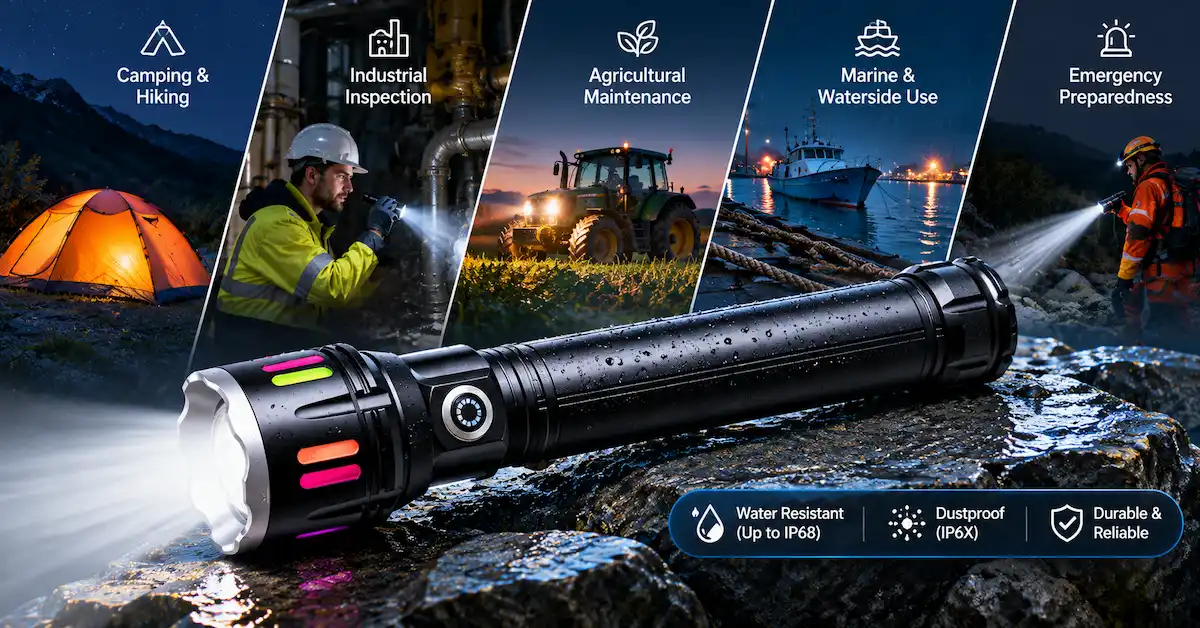
| Outdoor weather exposure | Tested ingress protection and durability | Specify the necessary environmental test requirements |
| Emergency equipment kits | Storage readiness, accessories, identification | Approve complete kit configurations |
| Hazardous-area operations | Applicable safety approval for the classified location | Require specifically approved equipment |
Selection principle: A flashlight should satisfy the most restrictive operational requirement first. Extra features or a lower price cannot compensate for failure to meet a mandatory safety or performance condition.
For supplementary applications, buyers can review the GHS rechargeable flashlight collection before selecting models for sample evaluation.
2. What Evidence Should Buyers Require From a Flashlight Supplier?
A credible procurement decision should distinguish between visible product features, manufacturer specifications, standardized test results, and actual field performance.
Four Levels of Product Evidence
| Evidence Level | What It Establishes | Main Limitation |
|---|---|---|
| Product photographs | Appearance, visible controls, accessories | Does not verify performance |
| Manufacturer specification sheet | Declared technical configuration | Requires appropriate verification |
| Standardized laboratory testing | Measured results under defined conditions | May not represent every field condition |
| Operational field evaluation | Suitability for a defined task | Results depend on environment and procedures |
This distinction is especially important for rescue-related purchasing.
A product image showing a powerful beam does not establish measured lumen output, runtime, water resistance, or rescue suitability.
The ANSI/PLATO FL 1-2025 Flashlight Basic Performance Standard provides a recognized technical framework for evaluating portable lighting performance.
However, applying a standard as a purchasing reference does not establish that a specific supplier's product has been independently tested against it.
Evidence Boundaries for GHS Products
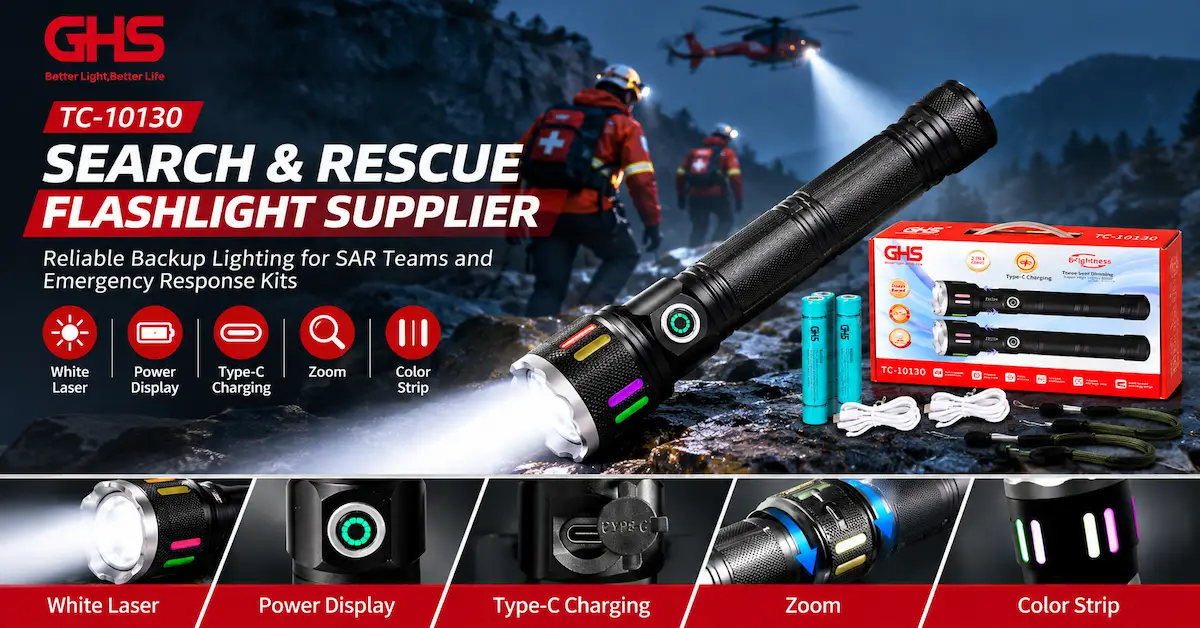
GHS publicly displays several rechargeable handheld flashlight designs and describes its lighting manufacturing business.
Its product pages can establish visible features and possible sourcing options. They do not, by themselves, verify professional SAR qualification, operational approval, or mission-critical performance.
Accordingly, buyers should request model-specific specifications and appropriate test evidence before approving a flashlight for an assigned role.
3. How Do Beam Intensity and Light Distribution Affect Night Operations?
Light output is one of the most frequently misunderstood flashlight specifications.
Lumens vs. Candela vs. Beam Distance
| Parameter | Definition | Practical Meaning |
|---|---|---|
| Lumens (lm) | Total emitted visible light | Overall light output |
| Candela (cd) | Luminous intensity in a particular direction | Degree of beam concentration |
| Beam Distance (m) | Distance at which a defined illumination threshold is reached | Standardized beam reach |
| Beam Pattern | Spatial distribution of light | Suitability for nearby or distant tasks |
A flashlight with a wide beam can distribute illumination over a larger nearby area.
A concentrated beam directs more light toward a narrower region, which may help illuminate a particular object farther away.
Neither beam type is universally superior.
Why Is Maximum Beam Distance Not Enough?
Standardized beam distance is a photometric measurement, not a guarantee that rescuers can identify a person or object at the advertised distance.
Actual visibility depends on terrain, atmospheric conditions, object contrast, ambient light, and the observer.
Consequently, a flashlight supplier should provide beam performance data that can be compared under consistent conditions.
Adjustable Beams: Useful but Not Automatically Better
Some rechargeable flashlights feature zoomable heads that allow a user to change the beam distribution.
For supplementary lighting, this may provide flexibility between near-field inspection and more concentrated illumination.
However, buyers should examine optical efficiency, mechanical reliability, ease of adjustment, and whether the beam remains appropriate throughout the adjustment range.
Buyer takeaway: Choose beam characteristics according to the work, not the largest number printed on the retail box.
4. How Should SAR Buyers Calculate Runtime and Battery Reserve?
A flashlight's maximum brightness and its useful operating duration are different performance characteristics.
The battery system, LED driver, heat management, and operating mode all influence runtime.
Why Does Brightness Decrease During Operation?
High-output rechargeable flashlights may reduce their output as internal temperature or battery conditions change.
This behavior can be part of normal thermal or electrical management.
A flashlight that begins at a high output may deliver substantially less light later in the operating period.
The ANSI/PLATO FL 1-2025 standard also distinguishes conventional operation from certain short-duration elevated-brightness modes.
Therefore, procurement teams should request sustained-output information where it matters rather than relying exclusively on initial brightness.
Define a Task-Based Runtime Requirement
A practical planning formula is:
Required Operating Duration = Expected Assignment Duration + Operational Reserve
For illustration, a buyer planning for a five-hour assignment and requiring an additional two-hour reserve would establish a seven-hour planning requirement.
These figures are hypothetical. Actual reserve policies must be determined by the relevant organization and its operating procedures.
The flashlight should then be evaluated at the intended usable brightness setting.
What Should Battery Testing Include?
Important considerations include battery chemistry, approved configuration, charging behavior, capacity, temperature sensitivity, and aging.
The following should be verified when relevant:
-
Runtime under defined conditions
-
Charging completion and indicators
-
Behavior during repeated charging
-
Battery compatibility and protection
-
Performance at expected operating temperatures
-
Storage and maintenance requirements
USB Type-C charging can offer convenience, but a Type-C connector alone does not establish charging speed, safety performance, or compatibility with all power sources.
5. What Environmental and Safety Requirements Can Disqualify a Flashlight?
Environmental requirements should be treated as purchasing gates rather than optional marketing features.
Water, Dust, Impact, and Hazardous-Area Requirements
| Requirement | What Buyers Should Verify | Common Purchasing Mistake |
|---|---|---|
| Water Resistance | Model-specific test evidence | Treating “waterproof” as a measurable rating |
| Dust Protection | Appropriate ingress classification | Assuming a sealed appearance proves dust protection |
| Impact Resistance | Specified and documented impact-test results | Equating a metal body with verified drop durability |
| Temperature Suitability | Approved operating conditions | Ignoring cold-weather battery performance |
| Hazardous-Area Approval | Correct approval for the applicable classification | Using an ordinary flashlight in a classified location |
IEC 60529 defines the IP Code framework for enclosure protection.
An IP rating addresses specified ingress-protection characteristics. It does not establish that a flashlight is intrinsically safe or approved for explosive atmospheres.
Likewise, an advertised impact-resistant housing should not be treated as verified without relevant test evidence.
When Should Procurement Stop?
A buyer should not approve a model for its intended application when mandatory protection or safety requirements cannot be documented.
For specialized operations involving explosive atmospheres, underwater rescue, firefighting, or other hazardous conditions, the purchasing organization should obtain equipment appropriate to the specific environment.
A standard rechargeable flashlight should not be marketed as certified professional rescue equipment without supporting evidence.
6. Which GHS Flashlight Models Are Suitable for Initial Evaluation?
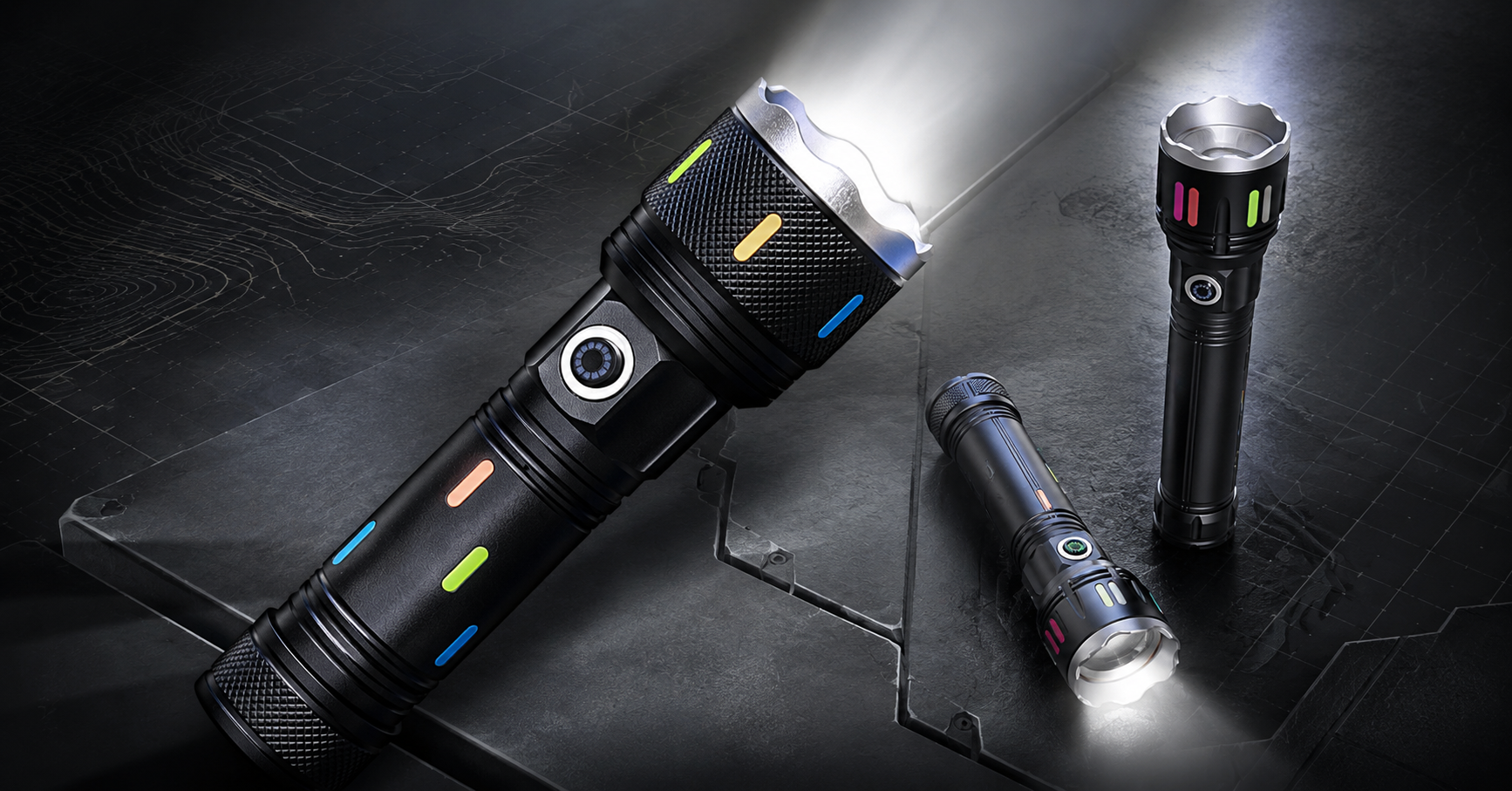
GHS offers several rechargeable handheld flashlight models with different external designs and operating features.
These products may serve as starting points for evaluating supplementary illumination, general emergency preparedness, equipment checks, and non-specialized backup kits.
The following comparison is based on publicly displayed product information, not independent performance testing.
GHS Rechargeable Flashlight Comparison
| Model | Displayed Features | Potential Evaluation Role | Required Verification |
|---|---|---|---|
| TC-10120 | Type-C charging, side switch, adjustable beam structure | Portable supplementary illumination | Output, runtime, battery and environmental performance |
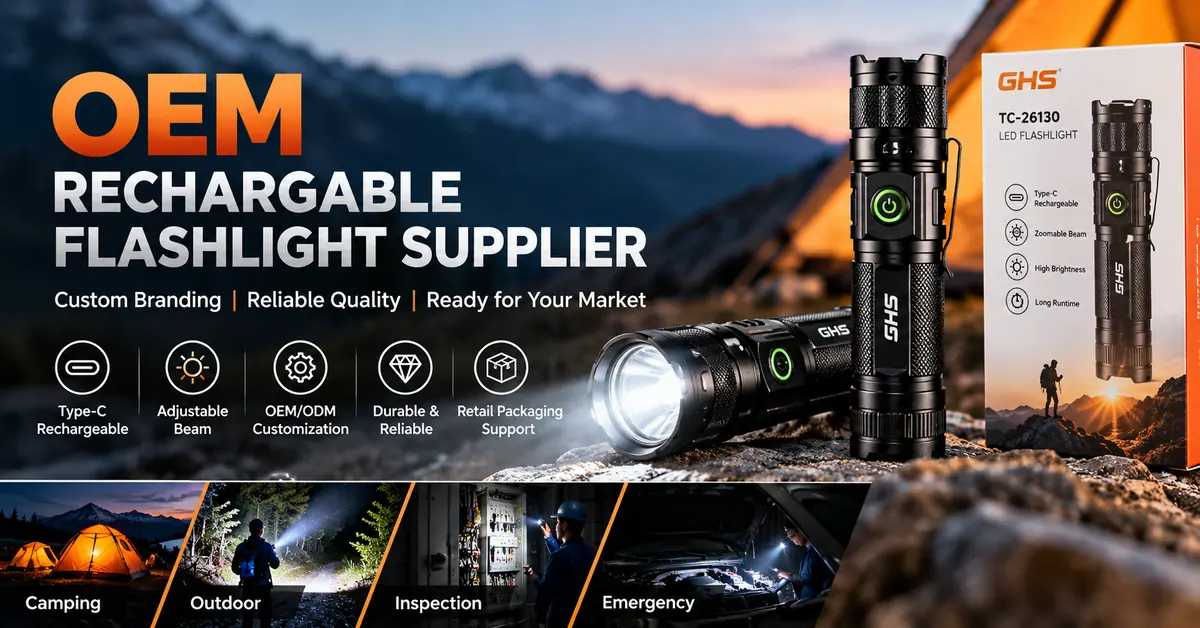
| TC-26130 | Rechargeable design, zoomable head, side control | General emergency equipment kits | Exact version, charging, accessories and durability |
| S-P900 | Rechargeable handheld design, textured grip, adjustable beam concept | Utility lighting and equipment inspection | Battery, beam behavior, assembly and test data |
| S-P200W | Larger high-intensity handheld format, adjustable beam | Evaluation for concentrated supplementary illumination | Candela, sustained output, weight and runtime |
Which Model Should a Buyer Evaluate First?
TC-10120: A candidate for buyers who prioritize rechargeable portable lighting, straightforward handling, and adjustable beam features.
TC-26130: A possible starting point for emergency accessory kits and rechargeable utility product combinations.
S-P900: An alternative rechargeable handheld format worth examining for general inspection and preparedness applications.
S-P200W: A larger flashlight platform for buyers interested in focused illumination, subject to measured beam and runtime performance.
These descriptions do not establish a ranking of rescue effectiveness.
The S-P200W model designation also should not be interpreted as verified electrical wattage.
Before ordering, buyers should request the current specification for each exact model and configuration.
7. How Should a Supplier's Flashlights Be Tested Before Bulk Orders?
A structured sample evaluation can reduce the risk of buying products that perform differently from the purchasing specification.
Recommended Sample Qualification Procedure
Step 1: Confirm the Technical Configuration
Record the model, battery type, LED system, charging arrangement, housing, included accessories, and operating modes.
Step 2: Measure Lighting Performance
Evaluate beam characteristics and output at the intended operating modes using agreed measurement methods.
Step 3: Test Runtime
Record the light-output behavior throughout the required period, including any output reduction.
Step 4: Verify Mechanical and Electrical Operation
Check switches, charging connectors, focusing mechanisms, assembly fit, and relevant indicators.
Step 5: Review Environmental Evidence
Confirm the appropriate ingress, impact, and temperature requirements for the intended role.
Step 6: Approve the Complete Kit
Inspect the actual accessories, manuals, labels, packaging, and storage arrangements.
Sample Acceptance Matrix
| Test Item | Acceptance Criterion | If the Requirement Fails |
|---|---|---|
| Light Output | Meets the buyer's agreed measured specification | Reject or revise |
| Beam Suitability | Meets the assigned task requirement | Select an alternative |
| Runtime | Meets the approved operating-duration requirement | Change mode, power plan, or model |
| Charging | Operates according to the agreed specification | Correct before approval |
| Controls | Can be operated reliably by intended users | Reassess design |
| Environmental Protection | Meets mandatory documented requirements | Reject for that environment |
| Packaging | Matches approved equipment configuration | Correct before shipment |
Acceptance thresholds should be established before testing.
For critical requirements, buyers should not approve a product solely because other features perform well.
8. Practical Procurement Example: Preparing 80 Backup Lighting Kits
The following is a hypothetical procurement scenario, not an actual GHS customer project or performance test.
Project Background
An emergency equipment distributor receives an inquiry for 80 supplementary lighting kits intended for a volunteer SAR organization's general field equipment inventory.
The organization already has a separate primary headlamp specification.
The distributor's responsibility is to source an additional handheld flashlight for approved supplementary tasks.
Initial Purchasing Requirements
The buyer establishes the following priorities:
-
Rechargeable handheld operation
-
Suitable beam for equipment checks
-
Simple activation and mode selection
-
Documented runtime at an agreed output
-
Appropriate environmental performance
-
Identifiable accessories and packaging
-
Consistent specifications across repeat orders
Engineering Evaluation
The distributor shortlists TC-10120, TC-26130, and S-P900 for physical evaluation based on their visible product designs.
Rather than immediately choosing the cheapest model, the buyer requests current specifications and representative samples.
All three models must pass the same functional and runtime assessment before a commercial decision.
Procurement Decision Path
| Evaluation Outcome | Recommended Action |
|---|---|
| Product meets mandatory requirements | Proceed to commercial comparison |
| Product needs minor packaging changes | Request correction and reapproval |
| Product lacks required runtime evidence | Request testing before approval |
| Product fails an environmental requirement | Exclude it from that application |
| Product configuration cannot be controlled | Reassess supplier or model |
Commercial Result
No actual performance results, cost savings, or passing model are assumed in this scenario.
The practical lesson is that technical qualification should precede the final commercial comparison.
For a distributor, this approach also creates a repeatable approval process that can be reused for future orders.
9. How Can Buyers Evaluate Manufacturing, Quality Control, and Repeat-Order Consistency?
A flashlight supplier should be evaluated not only on sample performance but also on its ability to maintain the approved configuration.
Important Quality-Control Stages
| Production Stage | Recommended Checks |
|---|---|
| Incoming Components | Battery, LED, driver, switches, optics, housing |
| Assembly | Electrical connections, mechanical fit, charging interface |
| Functional Inspection | Operating modes, switches, charging behavior |
| Performance Sampling | Agreed output, runtime and other critical tests |
| Final Inspection | Product identity, accessories, packaging, labels |
For repeat orders, buyers should establish a written specification and approved sample reference.
Important component changes, including changes to batteries, LED drivers or charging circuits, should be reviewed before acceptance.
Two flashlights can appear identical while containing components that affect performance.
Why Traceability Matters
Batch and model identification can help distributors investigate reported defects, identify affected shipments, and coordinate corrective actions.
For institutional buyers, clear documentation can also simplify inventory management and replacement planning.
A supplier's manufacturing claims should be supported by relevant factory information, current product specifications, and appropriate quality records.
10. What Determines the Total Cost of SAR Backup Flashlight Procurement?
The purchasing decision should consider total usable inventory cost, not simply the quoted unit price.
Key Cost Drivers
| Cost Category | Procurement Impact |
|---|---|
| Product Configuration | Determines component and assembly costs |
| Battery and Charging | Affects usability, replacement planning and transport |
| Testing | Supports technical acceptance |
| Packaging and Accessories | Influences kit readiness |
| Shipping | Affects landed cost and delivery planning |
| Defects and Returns | Creates replacement and administrative expense |
| Reorder Availability | Influences long-term inventory support |
A useful commercial comparison is:
Cost per Accepted Unit = Total Procurement and Verification Cost ÷ Number of Accepted Units
Suppliers should be compared using equivalent specifications and agreed delivery conditions.
MOQ and Lead Time
Minimum order quantity and delivery schedules can depend on the model, accessories, branding, packaging, available components, and order volume.
A purchasing schedule should distinguish sample approval, production preparation, inspection, packaging, and shipping.
Buyers should request project-specific terms instead of assuming one standard MOQ or lead time for every model.
11. Why Consider GHS for Rechargeable Emergency Lighting Sourcing?
GHS (Guanghuishi), operating under the published English name Guangdong Guanghuishi Electrical Appliances Co., Ltd., presents itself as a China-based lighting manufacturer involved in product development, manufacturing, and sales.
According to its company information, GHS was established in 2009, operates a manufacturing facility in Zhaoqing, Guangdong, and established a Dubai branch in 2017.
The company displays multiple rechargeable flashlight models, including general-purpose handheld products and larger high-intensity formats.
For importers and emergency equipment distributors, GHS provides product platforms that can be investigated for general-purpose supplementary lighting and preparedness applications.
Useful starting points include:
The company's publicly available product descriptions do not establish professional SAR certification for the models discussed in this article.
Buyers should request the necessary technical evidence before selecting equipment for any operational role.
12. What Should Buyers Include in a Search and Rescue Flashlight RFQ?
A complete request for quotation helps suppliers distinguish ordinary backup lighting from specialized operational requirements.
Recommended RFQ Checklist
| RFQ Information | Buyer Should Specify |
|---|---|
| Intended Lighting Role | Primary, supplementary, or emergency kit |
| Operating Environment | Indoor, outdoor, wet, dusty, cold, or specialized |
| Beam Requirement | Inspection distance and coverage |
| Runtime | Required output mode and operating duration |
| Battery | Approved battery configuration |
| Charging | Interface and charging requirements |
| Environmental Testing | Required protection and durability evidence |
| Product Reference | Preferred model or equivalent specification |
| Quantity | Initial order and repeat demand |
| Accessories | Charging cables, lanyards, packaging |
| Documentation | Applicable tests, transportation and market requirements |
| Delivery | Destination and requested schedule |
Looking for rechargeable handheld flashlights for supplementary emergency lighting or bulk preparedness kits?
13. Frequently Asked Questions
1. What should buyers look for in a search and rescue flashlight supplier?
Buyers should prioritize documented performance, suitable beam characteristics, verified runtime, appropriate environmental protection, reliable controls, quality inspection and consistent supply. The flashlight must satisfy the requirements of its intended role.
2. Can ordinary rechargeable flashlights be used in SAR equipment kits?
They may be considered for supplementary lighting or general preparedness when their verified performance matches the assigned task. They should not automatically replace qualified primary or mission-critical equipment.
3. Is a higher-lumen flashlight always better for search operations?
No. Higher output does not guarantee a more suitable beam or longer useful operating time. Beam distribution, sustained illumination, task distance and operator needs all matter.
4. What is the difference between lumens and candela?
Lumens measure total visible light output. Candela measures luminous intensity in a particular direction. Both can help buyers compare flashlight performance, but they describe different characteristics.
5. How can buyers calculate the required flashlight runtime?
Define the expected operating period, add an appropriate operational reserve, and verify that the flashlight meets the requirement at the intended lighting mode. The reserve must follow the organization's procedures.
6. Are USB-C rechargeable flashlights suitable for emergency backup kits?
They can be suitable when charging reliability, battery condition, runtime and operating requirements have been verified. USB-C connectivity alone does not establish equipment readiness.
7. Do search and rescue flashlights require an IP rating?
The required protection depends on the operating environment. Buyers should specify the relevant environmental requirement and request test evidence for any advertised IP rating.
8. Can GHS flashlights be used as professional rescue equipment?
GHS models may be evaluated for supplementary lighting applications, but their suitability for a professional rescue task must be established through the required specifications, testing and organizational approval.
9. What quality checks are important before bulk purchasing?
Buyers should verify charging, switches, light modes, beam characteristics, runtime, physical assembly, accessories, labeling and relevant environmental requirements. Approved samples should serve as controlled production references.
10. How can distributors request a bulk flashlight quotation from GHS?
Visit the GHS contact page and provide the intended lighting role, preferred models, expected order quantity, operating requirements, required documentation and delivery destination.
Conclusion
Choosing the right search and rescue flashlight supplier requires a technically structured purchasing process rather than relying on maximum brightness, product appearance or unit price.
For emergency equipment distributors and procurement teams, the most important steps are defining the lighting role, establishing measurable performance requirements, evaluating batteries and sustained runtime, confirming environmental suitability, and documenting sample acceptance.
A reliable sourcing decision should also account for redundancy, quality control, product configuration and repeat-order consistency.
GHS offers several rechargeable LED flashlight platforms that buyers can investigate for general-purpose supplementary lighting and emergency preparedness applications. The TC-10120, TC-26130, S-P900 and S-P200W provide different handheld formats for initial comparison, but professional SAR suitability must be independently verified for the specific assignment.
By combining a task-based selection matrix, standardized testing references and clear supplier requirements, buyers can make more informed purchasing decisions and reduce the risk of unsuitable lighting equipment entering operational inventories.
Need rechargeable handheld flashlights for an emergency equipment distribution program? Explore the GHS flashlight collection and contact GHS to discuss model specifications, sample testing, OEM requirements and bulk quotations.